Oil gains as geopolitical risk dominates while long-dated prices remain steady
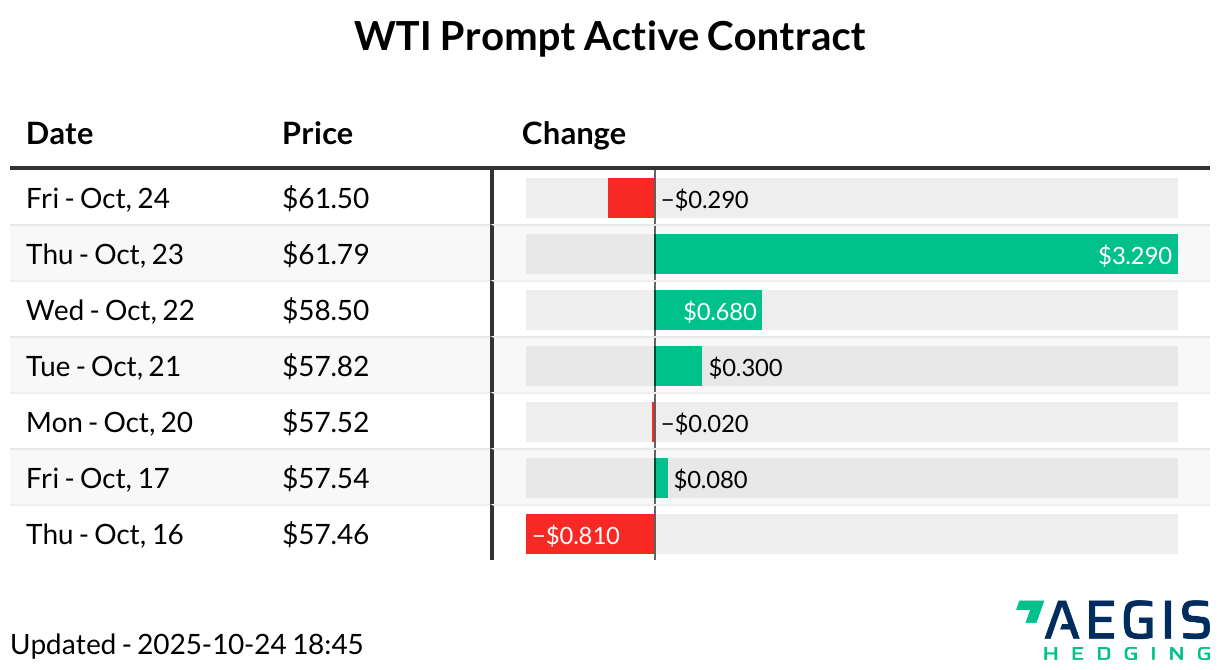
The WTI prompt-month contract rose 71 cents to $59.35/Bbl on Wednesday morning (7:45 AM CT)
The Kremlin said President Putin held “very useful” talks with US envoys Steve Witkoff and Jared Kushner, though no compromise has been reached on territorial control
As the US pushes for a negotiated end to the conflict, Ukraine has launched a record number of attacks on Russian energy infrastructure including commercial tankers
One ship manager told Bloomberg they would stop sending vessels to Russia after a drone strike damaged one of their freighters
President Putin warned that Russia may expand its strikes to port facilities and ships calling at Ukrainian ports
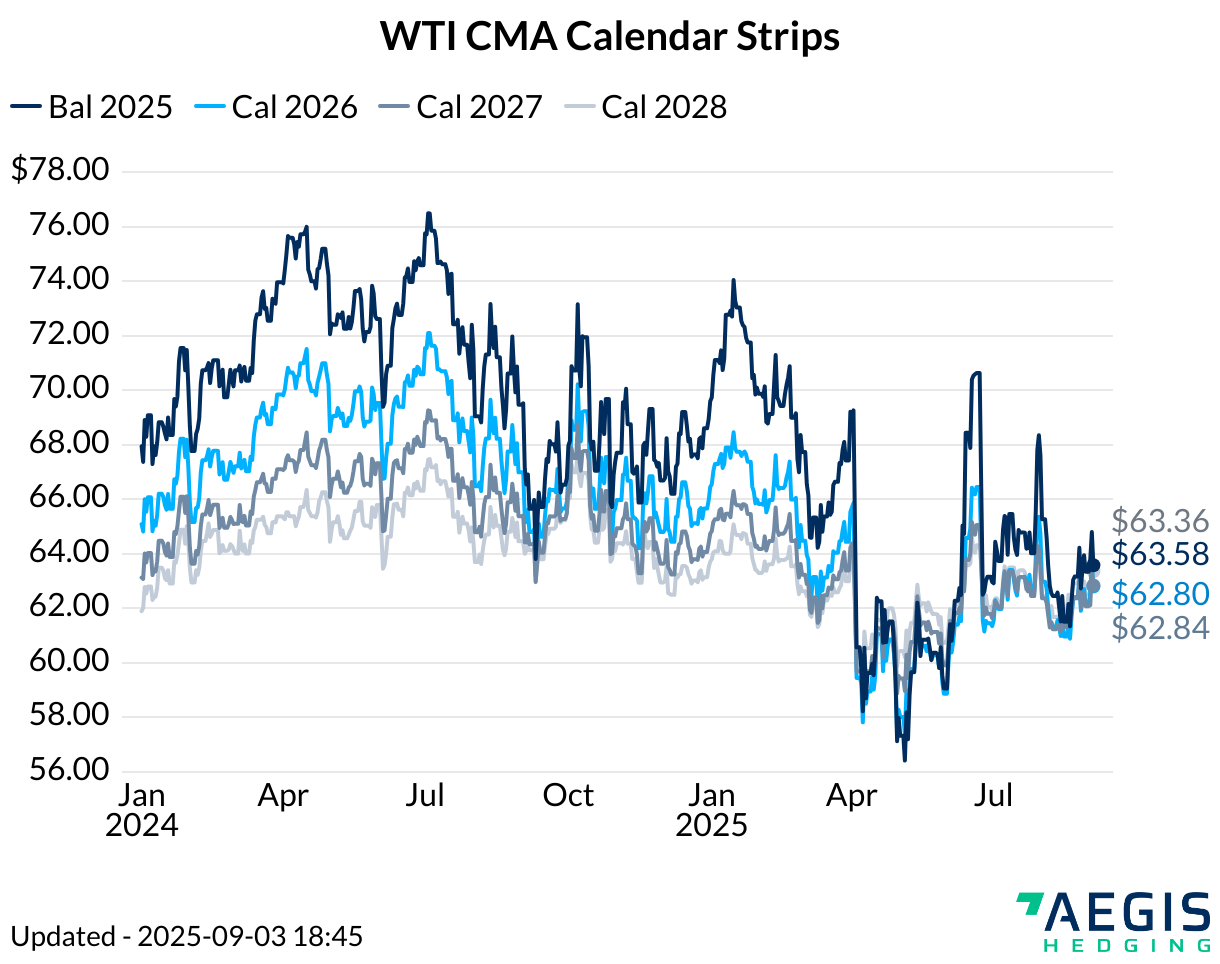
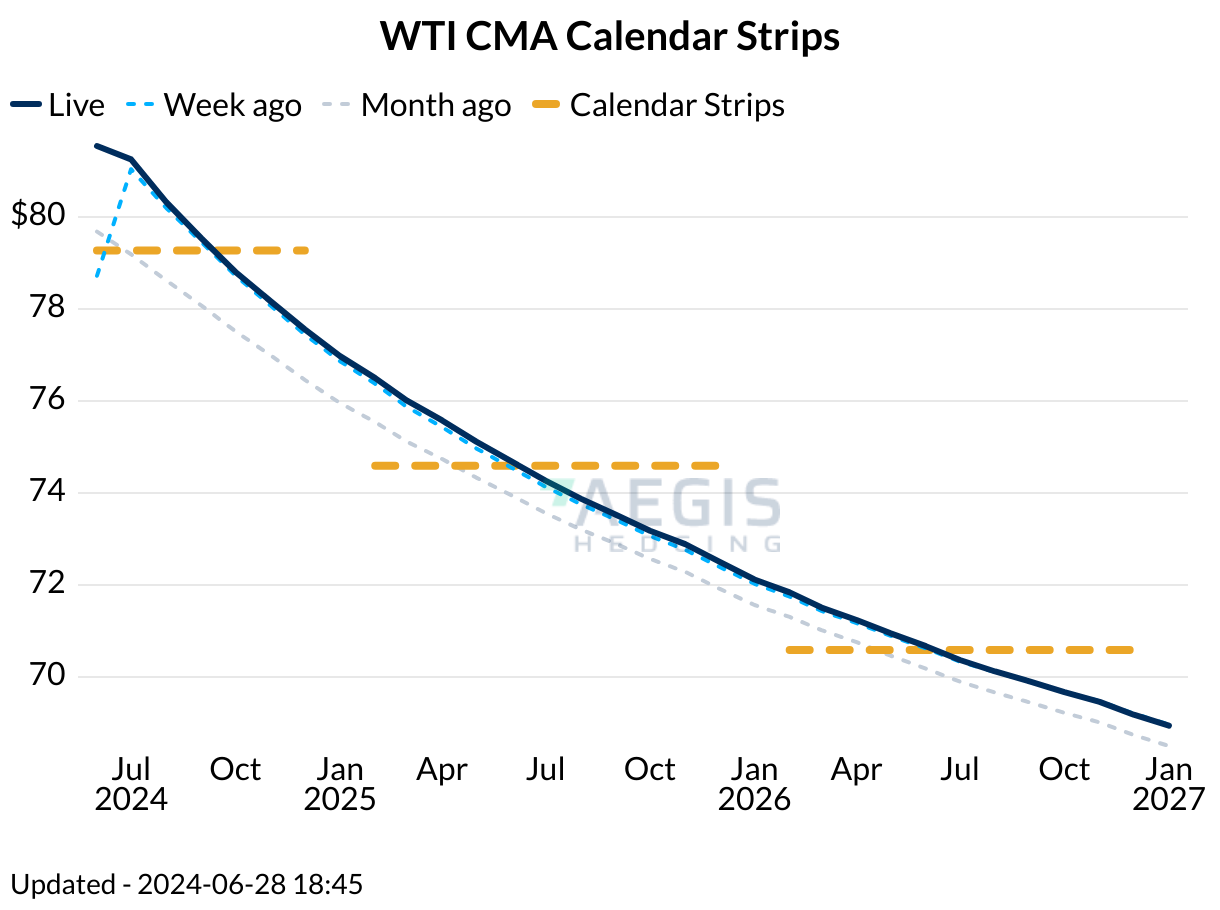
Bal 2025 is in slight backwardation to Cal 2026 and Cal 2027, before the curve gently rises into Cal 2028 at $60.25 (8:30 AM CT)
This mild backwardation supports the idea that near-term geopolitical volatility is not translating into expectations for tighter long-term balances
This includes the renewed US rhetoric toward Venezuela, where President Trump has suggested the Pentagon may consider strikes against drug cartels
Geopolitics driving elevated diesel prices (EIA)
Global diesel refinery margins have widened sharply since late October and are now at the highest levels of the year
The move higher reflects a mix of refinery outages in Russia and the Middle East, new US sanctions on Russian crude, and a drop in global refinery output
Diesel crack spreads strengthened quickly from mid-October to mid-November with New York Harbor, the US Gulf Coast, and Antwerp all rising above $1/gal for the first time in more than a year
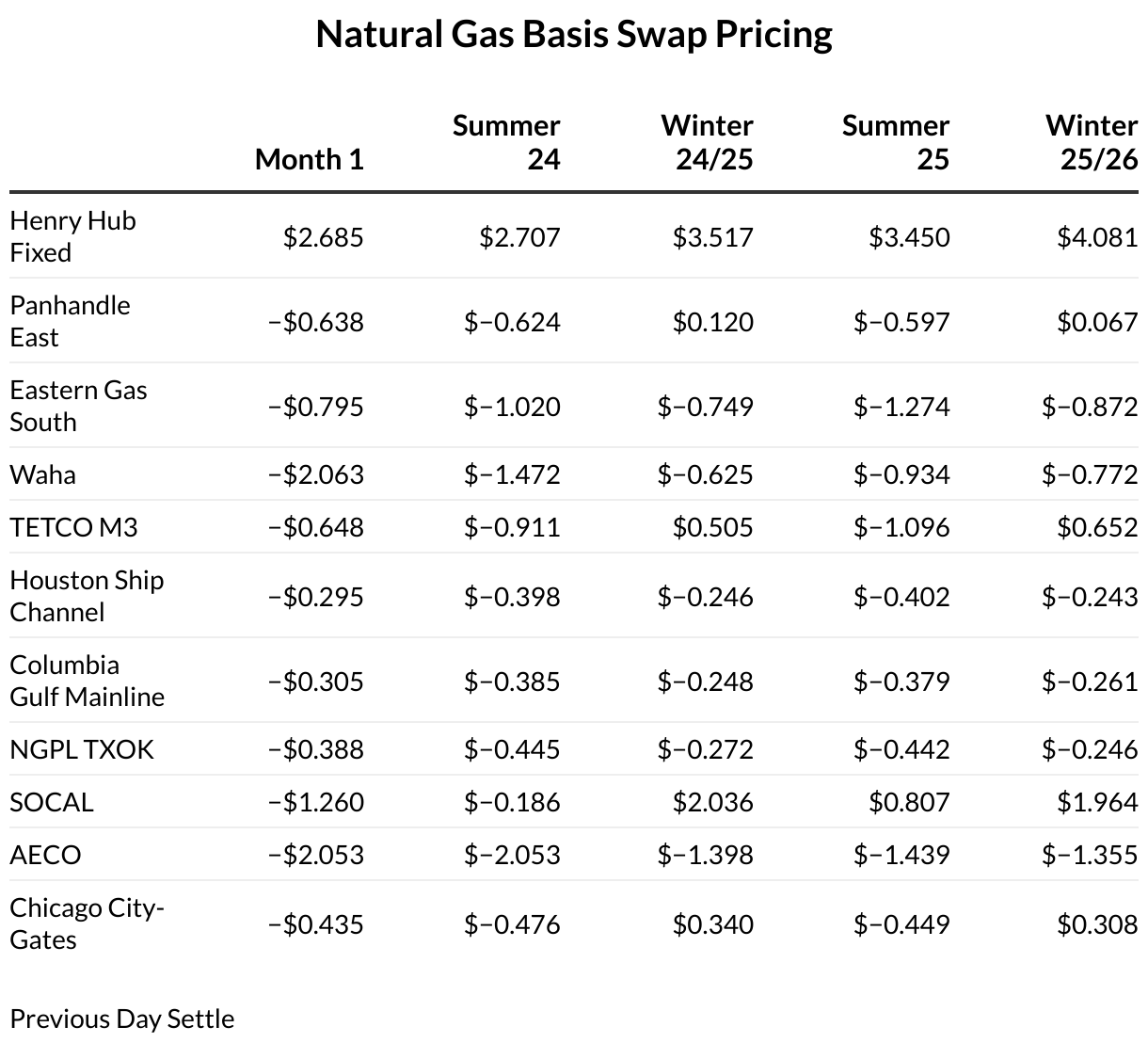
Natural gas trades higher, near $5/MMbtu
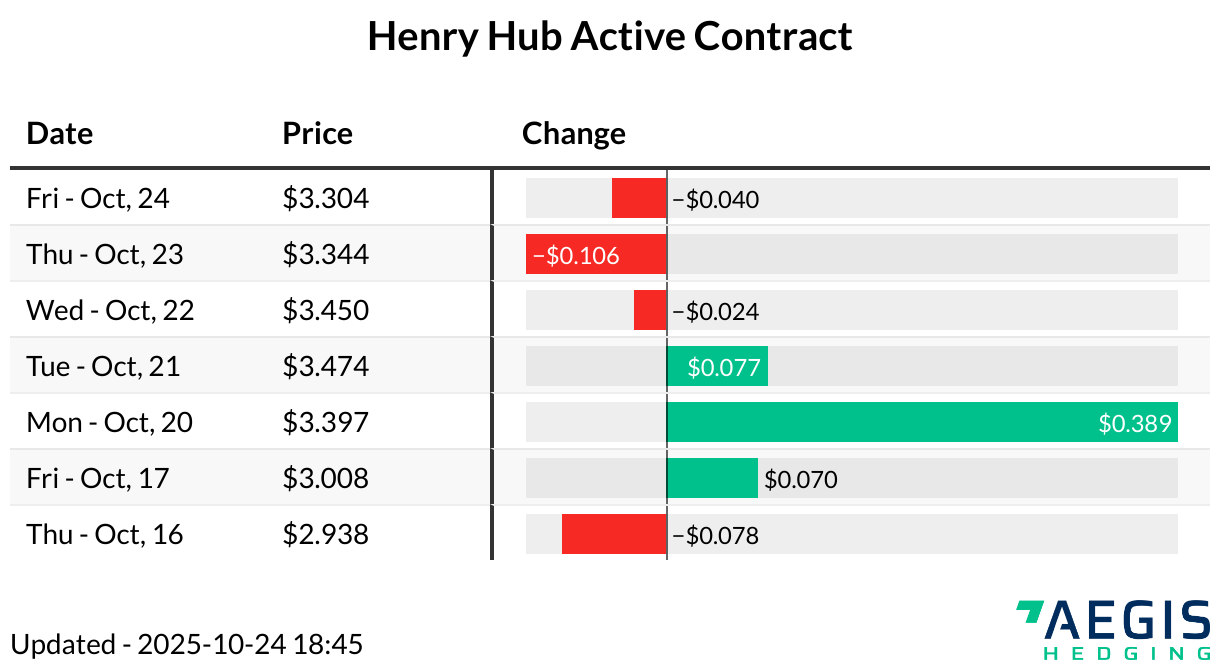
The prompt month Henry Hub contract reached a high of $4.99/MMbtu this morning, as prices remain firm
This December is currently forecast to be one of the top five coldest of the past 25 years, resulting in stronger gas consumption
Data centers and LNG to drive gas demand (Bloomberg)
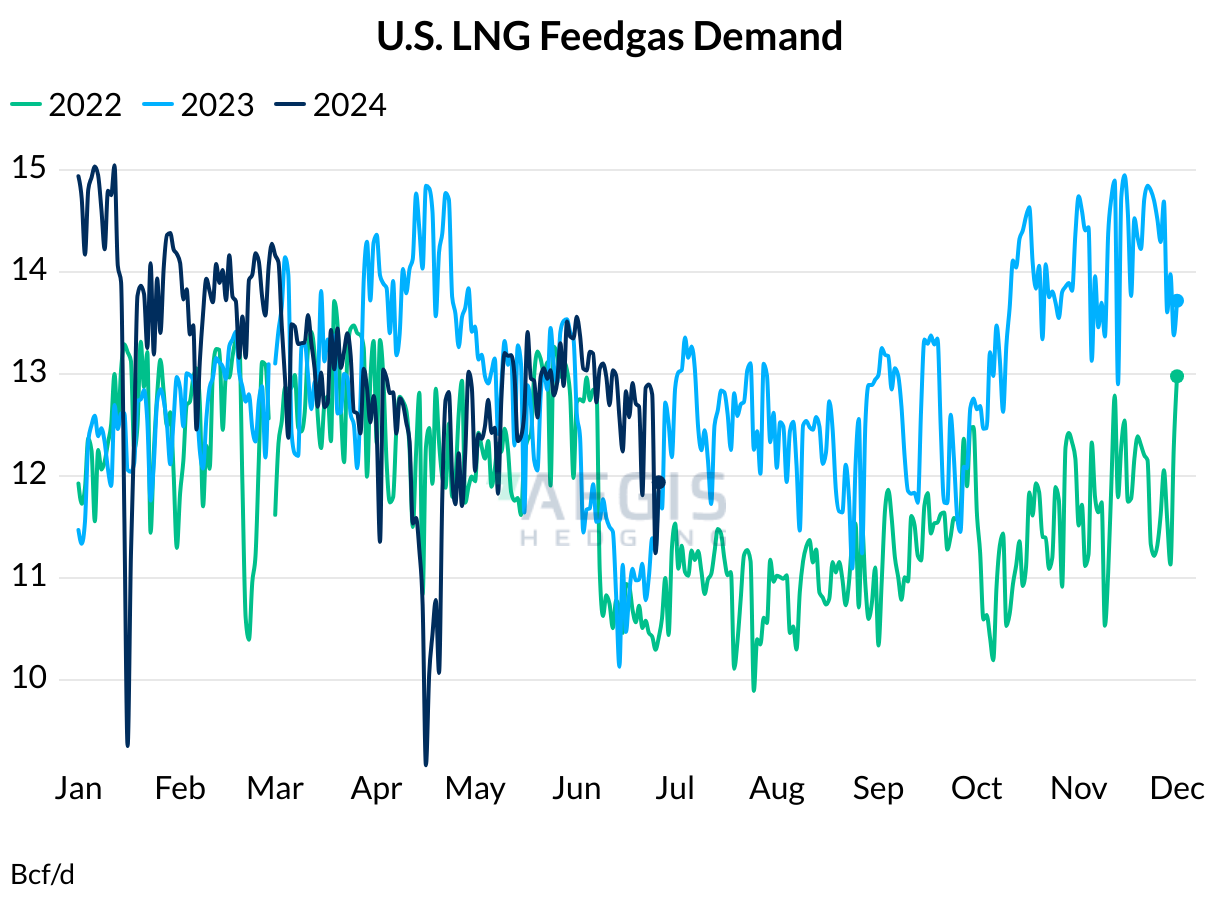
According to an analysis by Bloomberg, LNG and data centers may need about 19 Bcf/d of new gas supply by 2035
Gas demand from data centers alone could reach 6.8 Bcf/d by 2035, or about five times the current level
The Eastern US is expected to see the largest increase in data center gas demand, accounting for nearly 50% of the growth, followed by the South Central and Midwest
A combination of increased demand from LNG exports and power consumption could keep gas markets relatively tight over the next several years
Get market insights delivered to your Inbox every day!