
China’s Inventory Builds Could Help Moderate Oil Market Tightness
With conflict in the Middle East threatening regional energy flows, Chinese authorities have reportedly instructed refiners to suspend gasoline and diesel exports while several facilities reduce processing rates. The crude market impact unfolds through a simple chain of cause and effect.
First, disruptions to global oil flows mean fewer barrels are moving freely through international markets. Some of those barrels would normally make their way to China, the world’s largest crude importer. Second, as supply becomes more uncertain, China prioritizes domestic energy security. Refiners reduce processing rates, and the country relies less on new crude imports. Third, instead of increasing purchases from abroad, China can draw on the large inventories it accumulated over the past year. Crude stored in tanks is redirected to refineries to meet domestic fuel demand.
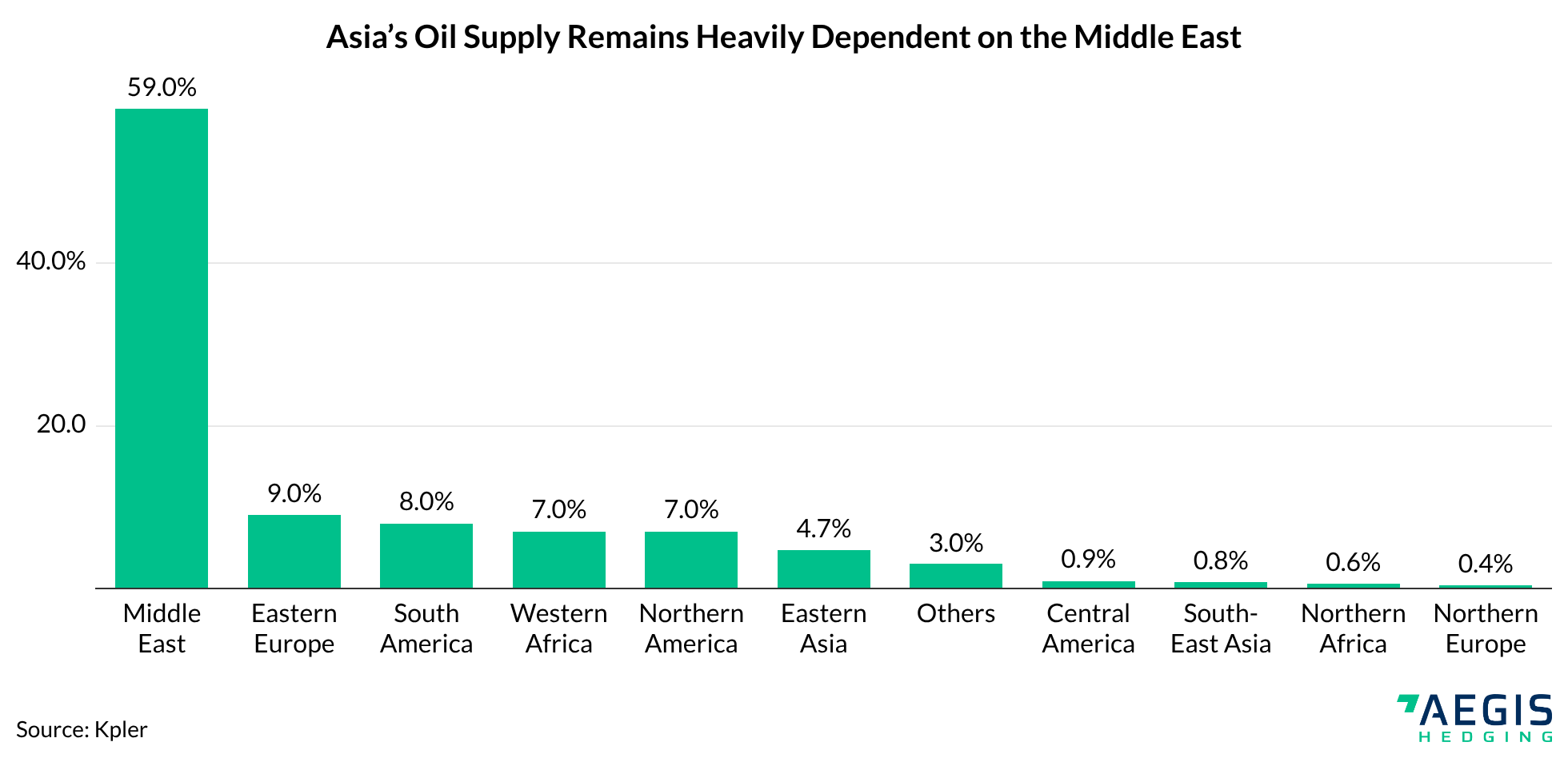
China’s stockpiling campaign over the past year has been substantial. Throughout 2025, Beijing accelerated purchases for its strategic petroleum reserves (SPR), absorbing surplus barrels that might otherwise have accumulated in OECD storage, stocks that heavily influence benchmark prices such as WTI and Brent. At the same time, China remains heavily reliant on Middle Eastern supply, with the region accounting for roughly 60% of Asia’s crude imports (figure above). This dependence helps explain why disruptions to Gulf oil flows can quickly shift China’s strategy from stockpiling crude to drawing down inventories.
Those inventories now play a different role in the market. The same barrels that previously absorbed surplus global supply can now replace imports. As China draws on its stored crude, incremental demand from the world’s largest buyer weakens, helping offset part of the global supply disruption.
In practical terms, this creates a balancing mechanism in crude markets. The higher prices move, the greater the incentive for China to rely on its inventories instead of importing additional barrels. As imports fall and stock drawdowns increase, some of the tightening in global balances is muted. In other words, the same stockpiles that helped support prices during last year’s surplus may now work in the opposite direction, moderating how tight the crude market can become as prices rise.