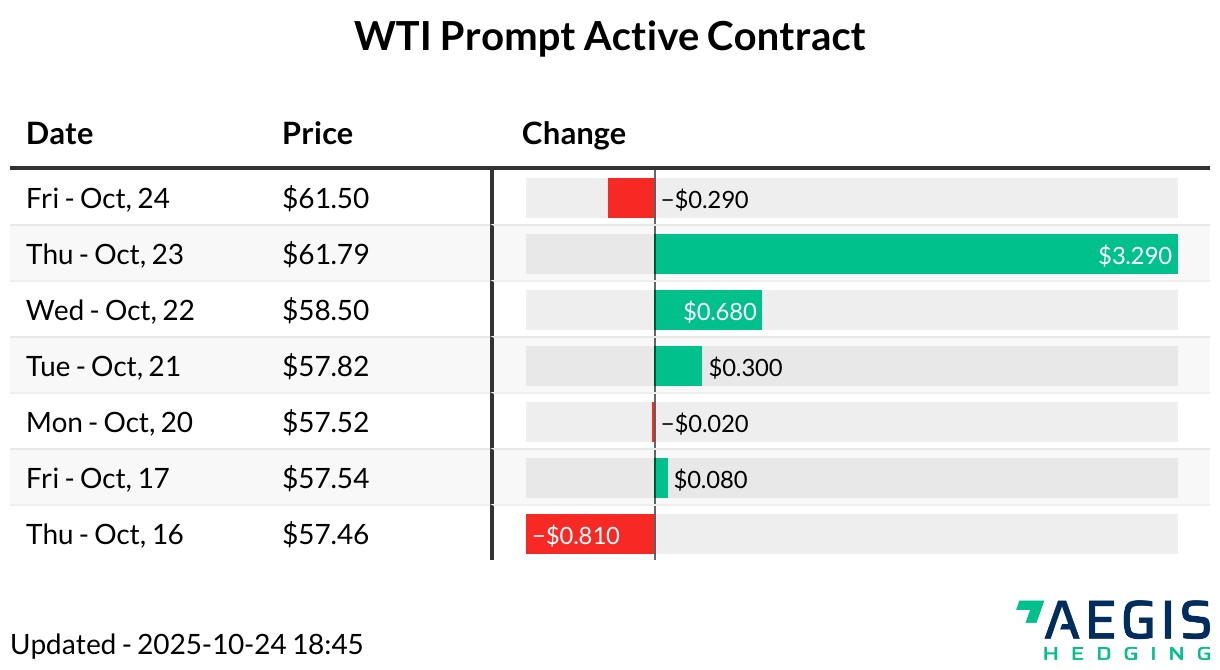
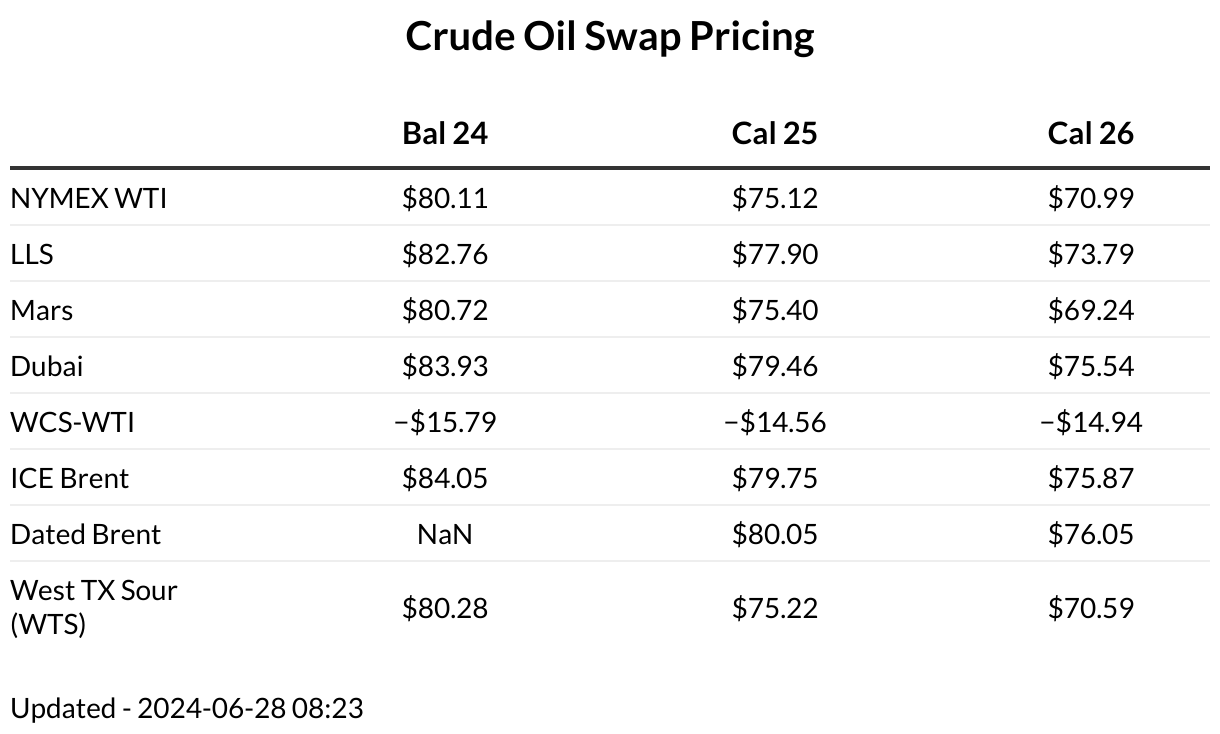
The WTI front-month contract fell $0.57 to $89.65/Bbl Wednesday morning (7:30 AM CT)
The US carried out a second consecutive day of strikes against Iran, while Tehran retaliated with attacks targeting Jordan, Bahrain, and Kuwait
Axios reported that the US struck two Iranian vessels under a new “tanker-for-tanker” policy intended to discourage Iran from attacking ships transiting the Strait of Hormuz
“This is a worse combination for the energy market than the situation we faced just a few days ago: supplies through Hormuz remain restricted, while the risk of attacks on tankers, energy infrastructure and production has increased at the same time,” said Arne Lohmann Rasmussen of Global Risk Management A/S
Domestically, the API reported that crude inventories declined by 2.6 MMBbl last week, which would represent the first draw in five weeks if confirmed by official government data later Wednesday
Refined products also strengthened sharply, with diesel cracks reaching new highs as Goldman Sachs warned that mounting attacks on refineries in the Middle East and Russia have placed additional strain on already-tight global refining capacity
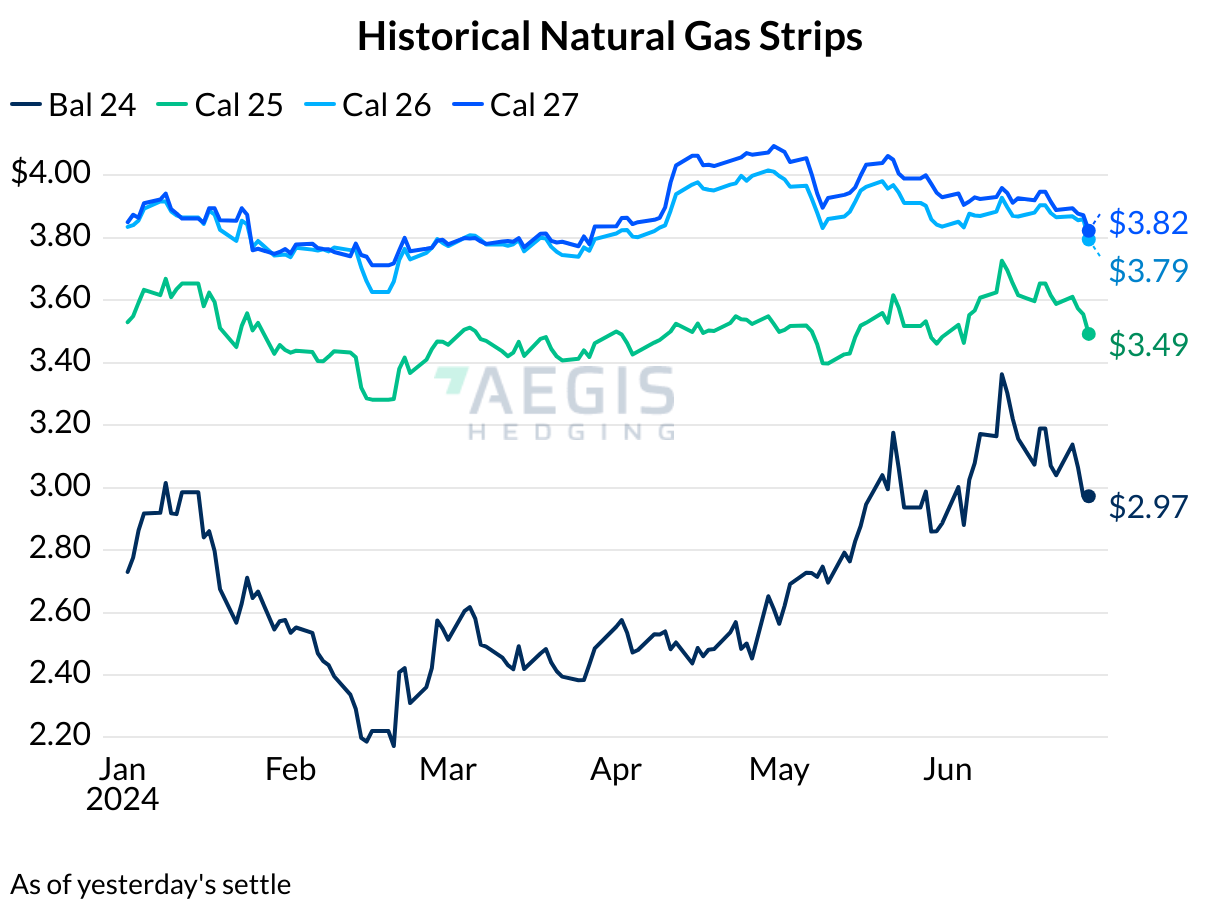
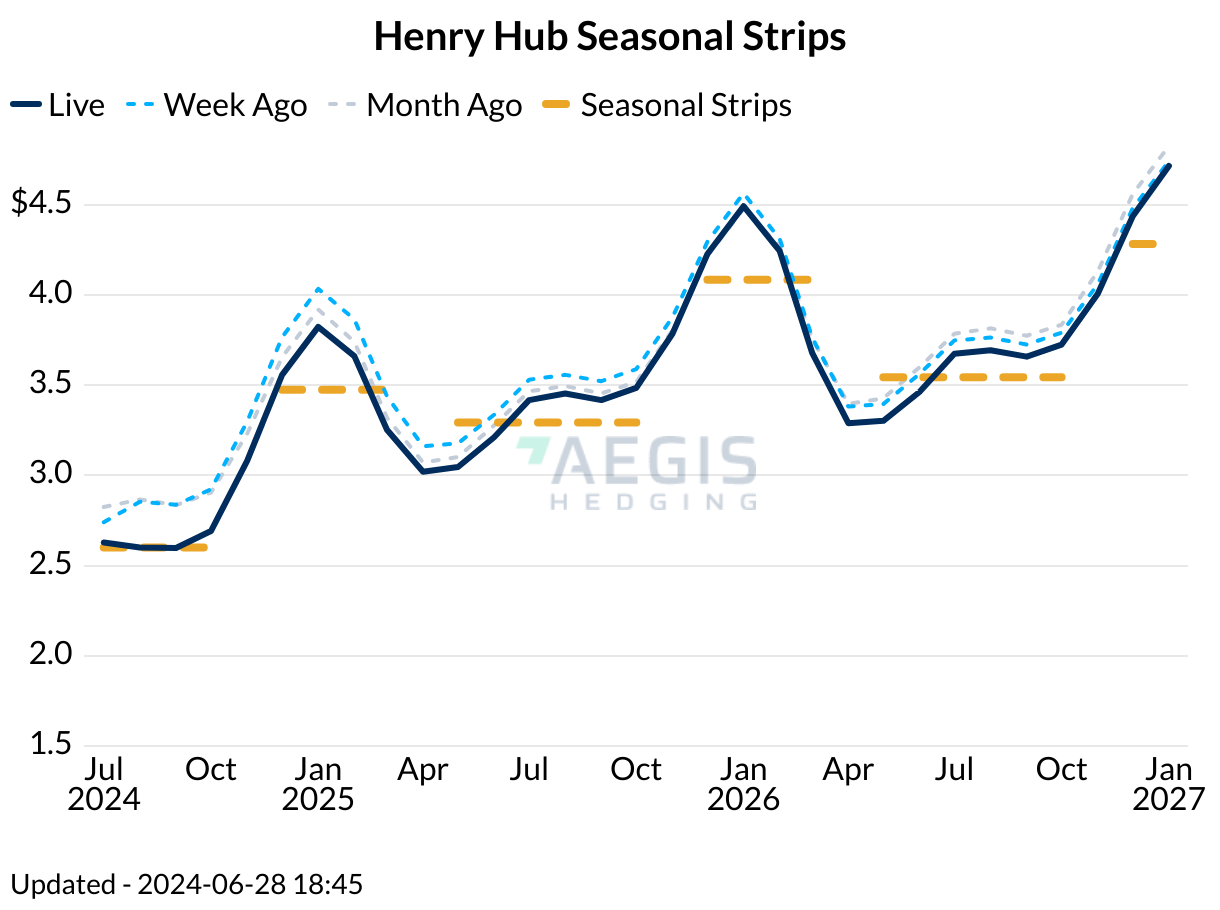
Gas inches higher as production takes a step back
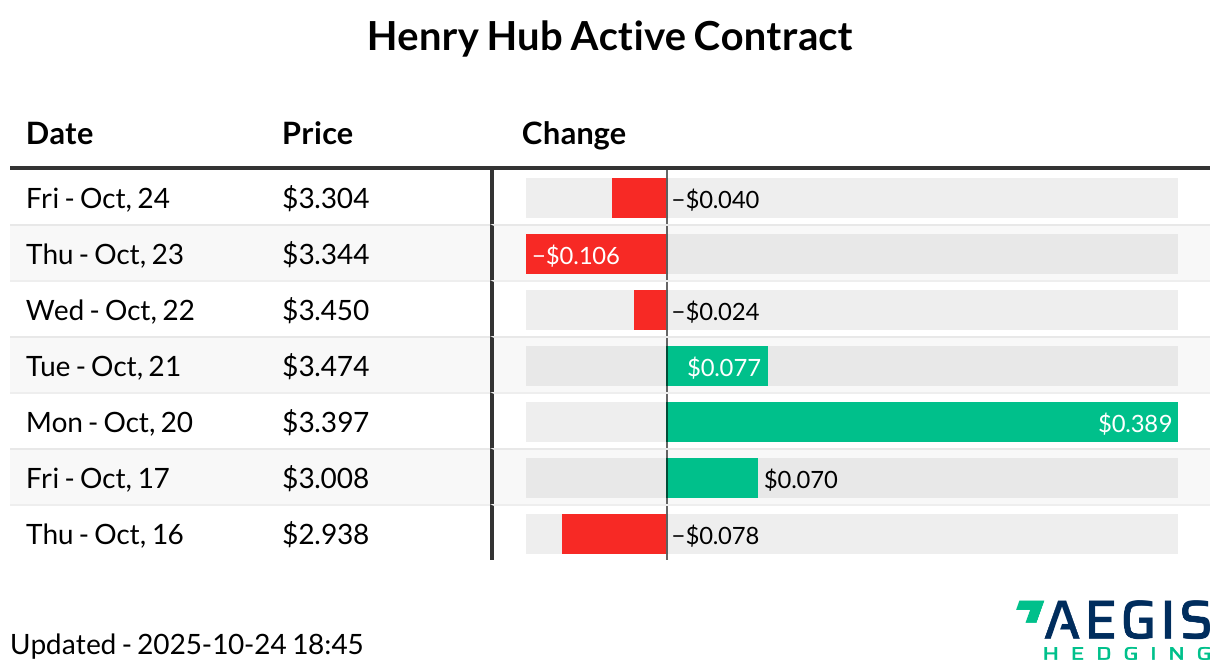
Natural gas is up 3.3c to $2.937/MMBtu (As of 07:30 AM CDT)
Production slipped nearly 1.5 Bcf/d this morning with losses spread across L48
The L48 gained over 8°F across the forecast range, with gains primarily centered in the Northeast, Midwest, and Rockies
CDDs peak in the forecast period tomorrow at 14 (Criterion)
Around mid-September, CDDs are expected to fall below 10
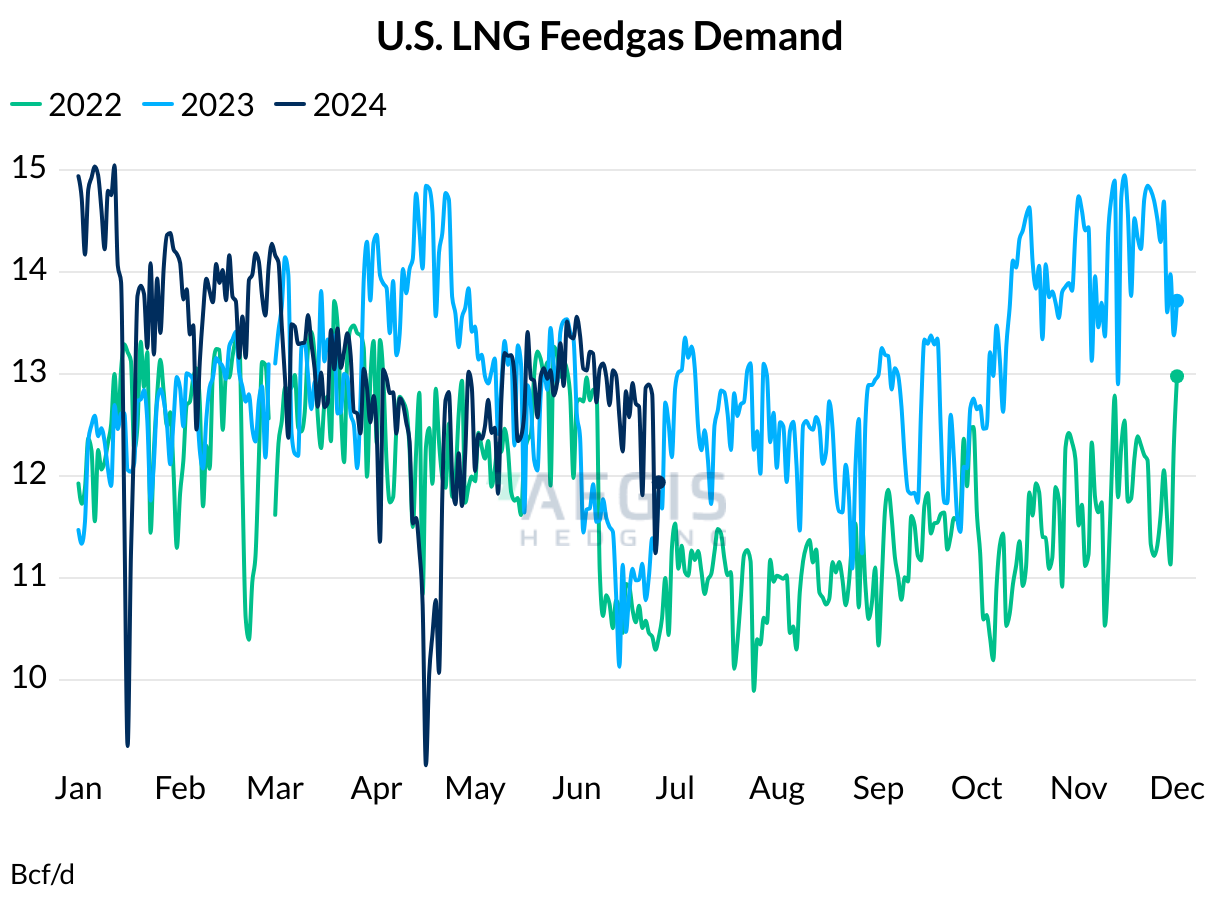
Sabine Pass nominated 626 MMcf/d of feedgas demand lower than yesterday, potentially due to the minor tropical storm that passed through
Summit reaches FID on Double E Pipeline expansion
The project will add 0.9 Bcf/d of takeaway capacity out of the Permian Basin
Bi-directional compressors will allow the pipe to respond to demand=pull opportunities from data centers
Get market insights delivered to your Inbox every day!