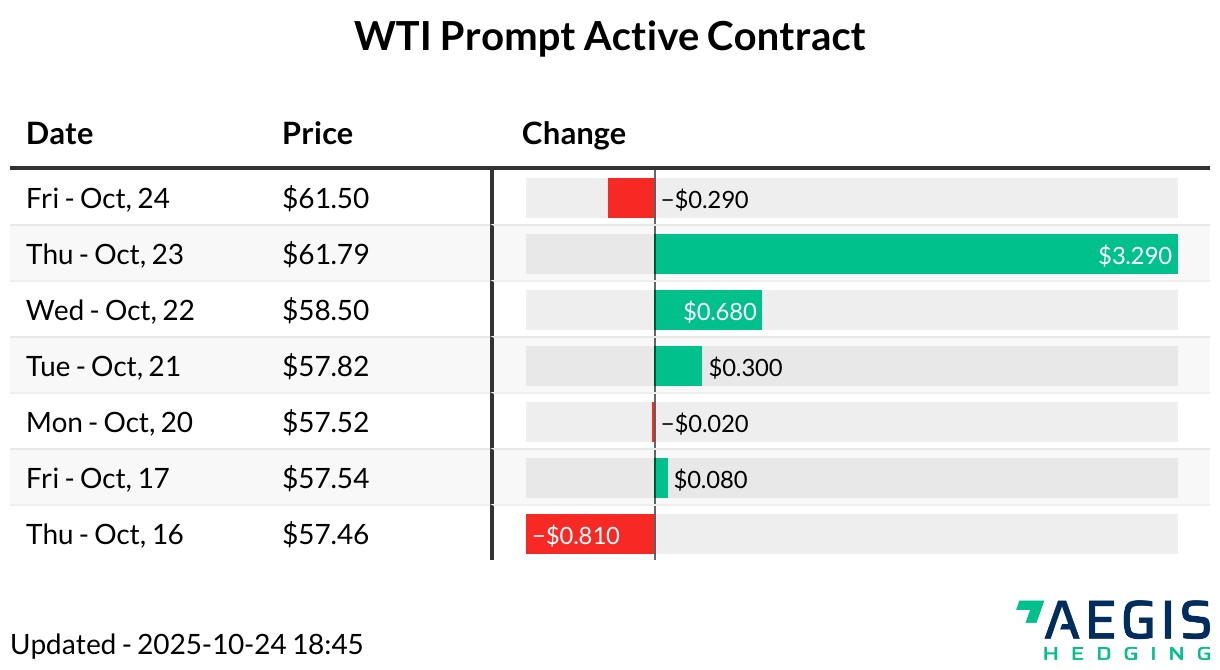
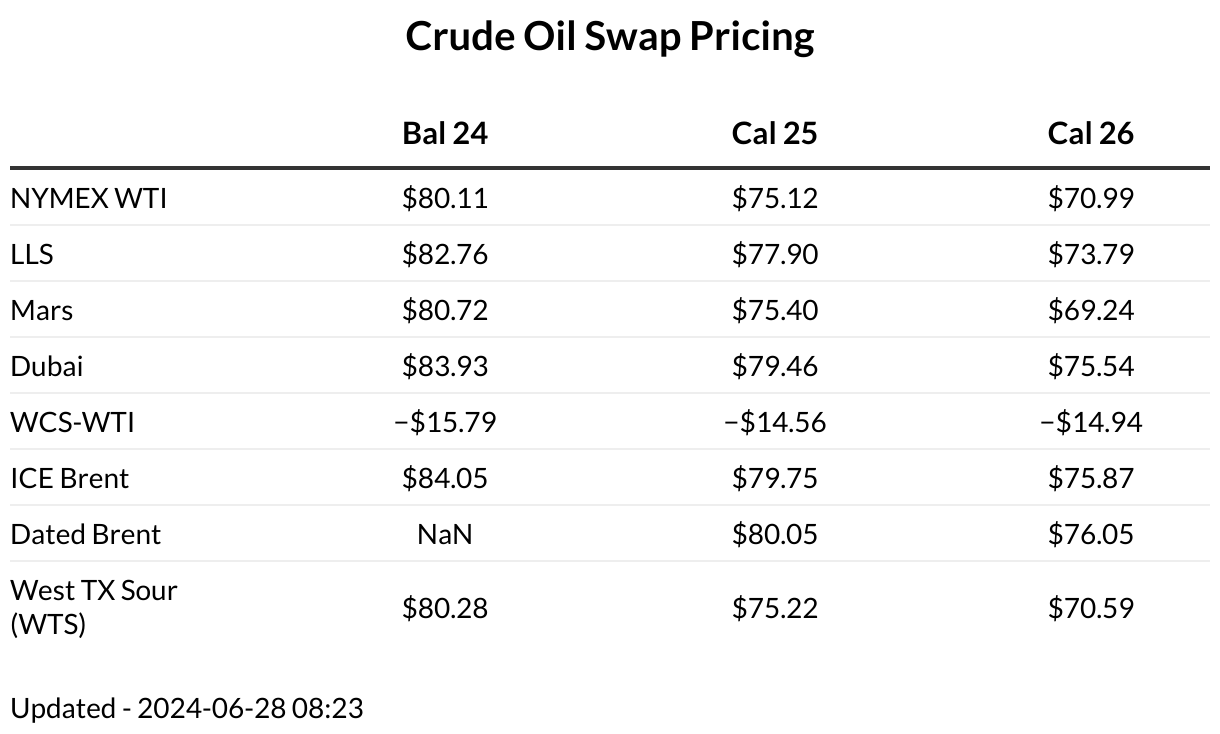
The WTI prompt-month contract fell $0.31 to $97.56/Bbl on Friday morning (7:30 AM CT)
The US and Iran are preparing to hold talks in Pakistan, while the Strait of Hormuz remains largely shut and ongoing exchanges between Israel and Hezbollah continue to cloud prospects for a durable ceasefire
Crude futures initially moved higher before pulling back as traders weighed a fresh round of strikes that disrupted Saudi Arabia’s supply capacity
Roughly 600 Mbbl/d of production capacity has been impacted, according to the state-run Saudi Press Agency
The attacks also reduced flows by about 700 Mbbl/d on the East-West pipeline, which routes crude to the Red Sea and bypasses the Strait of Hormuz
Analysts at JPMorgan Chase note that current market pricing reflects expectations for a relatively quick normalization of flows, with about half of typical transit volumes expected to return by May and full restoration by June
A slower recovery path, with flows only reaching pre-conflict levels by July, could add $15–$20/Bbl of upside risk to prices
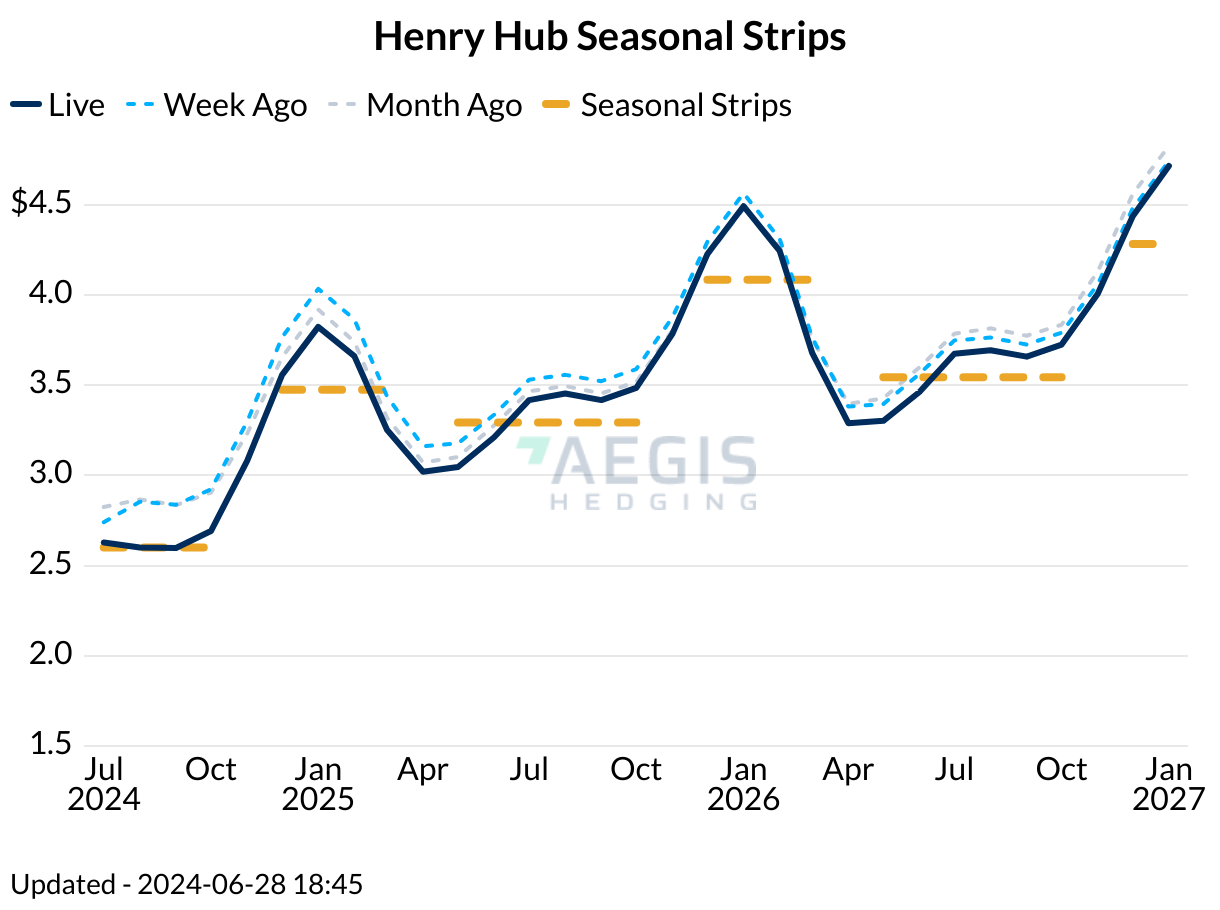
Natural gas slips further into shoulder season
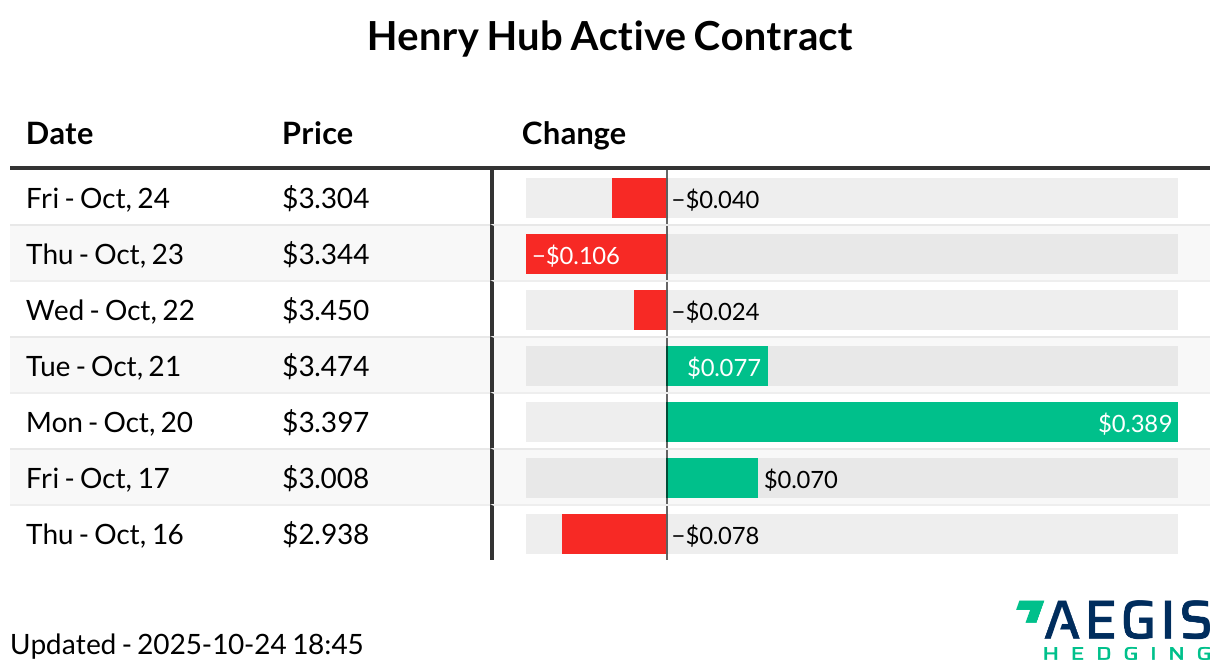
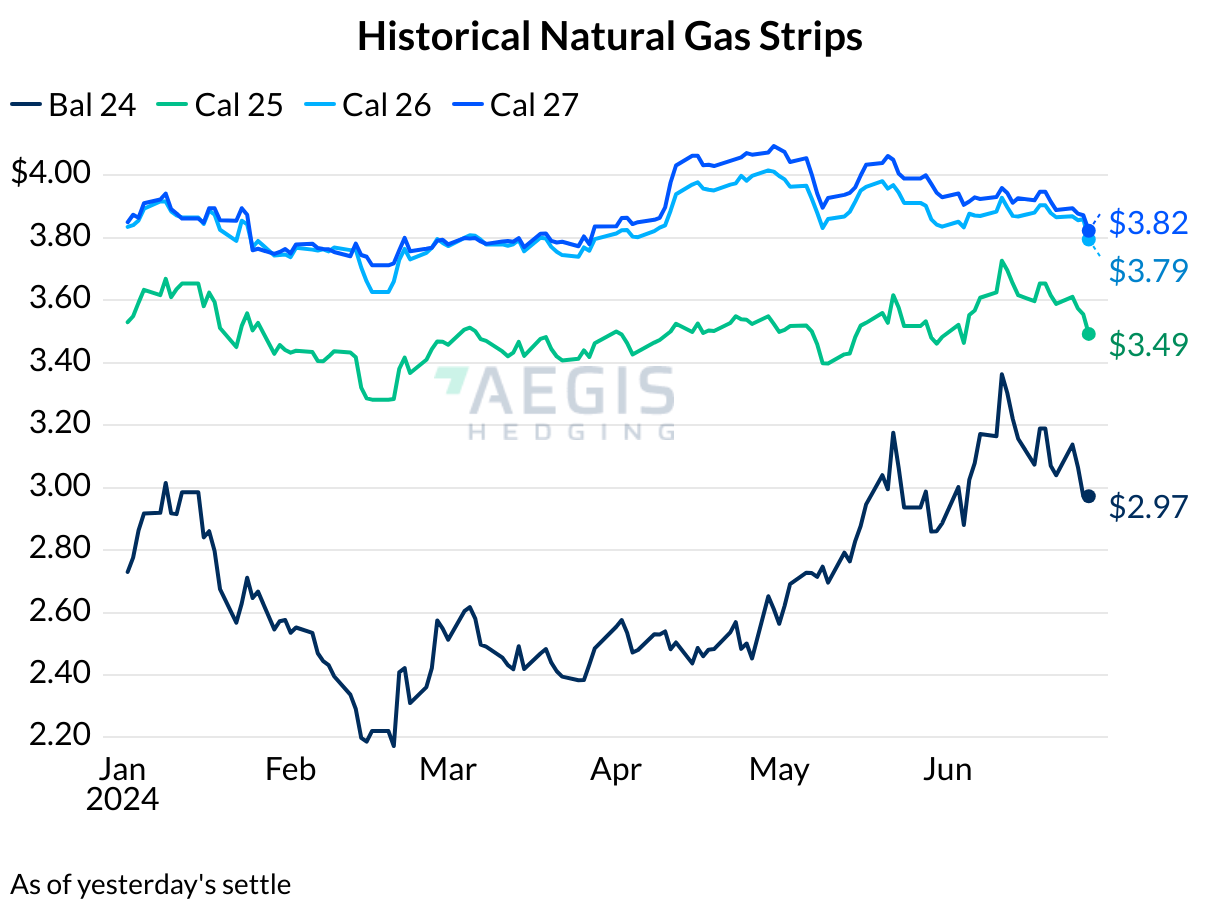
Natural gas is down -0.6c to $2.664/MMBtu (As of 07:30 AM CT)
Production rebounded 0.5 Bcf/d today to 107 Bcf/d, ending 3 consecutive losses (S&P)
Weather forecasts came in slightly warmer, with no significant change (Criterion)
Temperatures are still hovering above the 10 year average throughout the forecast period
Permian gas prices rebound (S&P)
Cash prices at the Waha Hub rebounded from April 6 lows of $-6.855/MMbtu to $-5.02/MMbtu
The rebound came as Permian Basin gas proudcers pulled back output from near record highs
Pipeline maintenance has reduced outbound capacity recently, with work on Transwestern continuing through April 14
EIA releases Annual Energy Outlook for 2026, projects robust natural gas production growth
The EIA projects that US dry gas production will rise from 107 Bcf/d in 2025 to between 133 Bcf/d and 151 Bcf/d modeled out to 2050
The strongest production growth is projected in the Eastern US with production estimated to nearly double by 2050
Get market insights delivered to your Inbox every day!